
Description
“Art is a safe way of preserving life, making it less laughable, less miserable, even comical. Life would be unbearable if it couldn’t be narrated. Dribbled between one comma and another. A bonfire tells a story and continues. The fire goes out and continues. He who tells stories unravels in daydreams. Once upon a time. In the beginning, the Almighty created heaven and earth. The earth was void and empty. The worms had yet to corrupt God’s porous flesh. Now, post-apocalypse, the earth returns to the vacuum, to dullness. I look through the slot in the rotten wood window, mountains of salt getting lost slowly. I nurture myself on that loss, that natural erosion.”
It is a work that will not make everyone comfortable, but it feels like a distinctly important novel and one that breaks into the English-speaking world[.]" — LitReactor
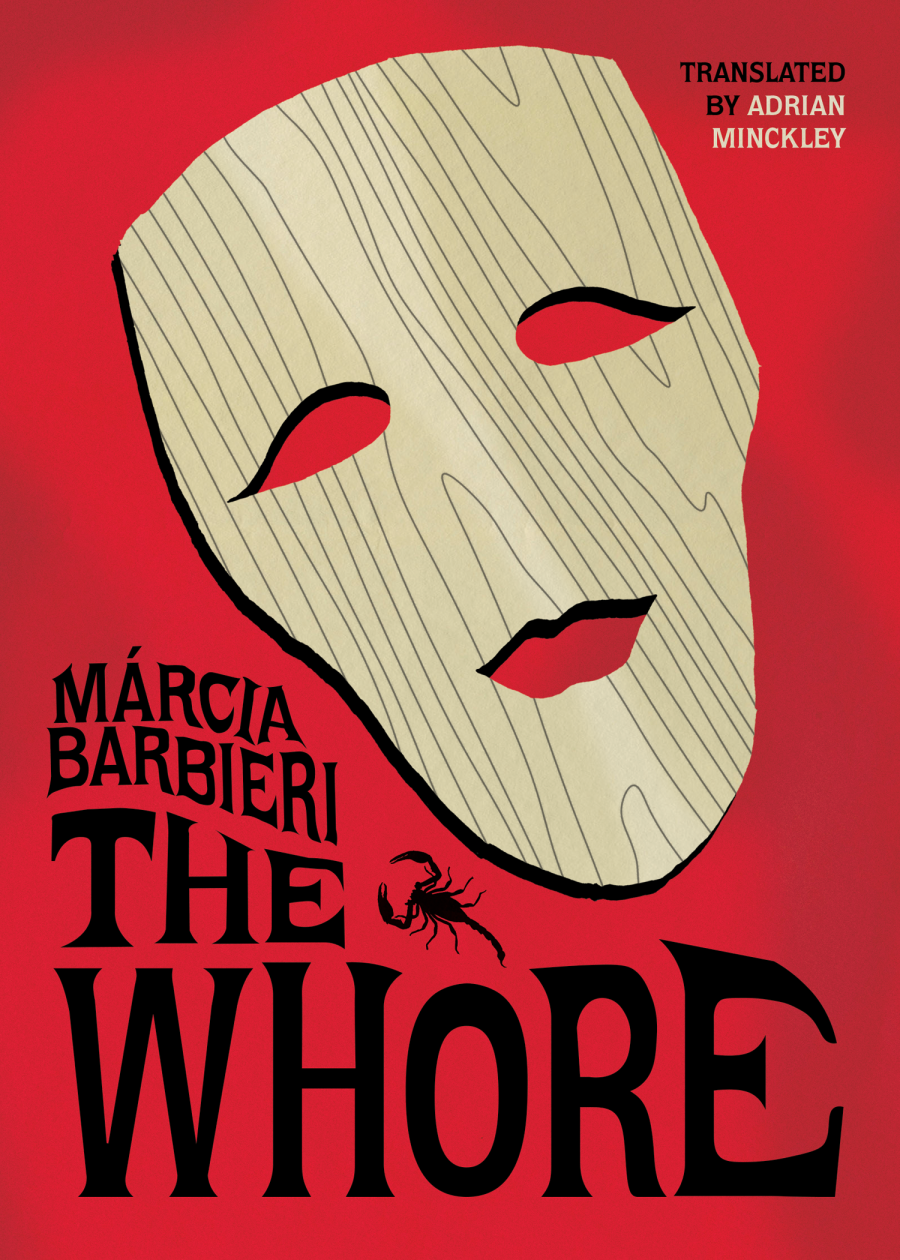
In a long, delirious monologue driven by bile and cocaine, a prostitute named Anúncia recounts the story of her life, remembering and sometimes inhabiting the men and women who left the deepest scars on her psyche—her absent father, her mentally disturbed mother, the son she never wanted, the parade of lovers like the poet and the philosopher—all the while drawing grand conclusions about the nature of sex, life, and death from her own experiences. In a world ravaged by pollution and unceasing war, the narrator's acid tongue condemns anyone who believes that filth and depravity have more to do with copulation than the misery inflicted by exploitation and inequality.
In acidic, relentless, and sometimes dream-like prose, Barbieri conjures a figure at once singularly human and divine, an androgynous, eternal being made of viscera and utterance. The Whore, more than anything, is an interrogation of interiority, and the ways in which the emotional and spiritual interior is not only inseparable from one’s physical form, but, in fact, strengthened by acknowledgement of the body.
Márcia Barbieri has authored five novels and three short story collections. Her first novel, Mosaico de Rancores, was published in German in 2016 by Clandestino Publikationen, and she has been a finalist or semifinalist for many of Brazil's largest literary awards, including the São Paulo Prize for Literature in 2018 for O Enterro do Lobo Branco, and the Guarulhos Literature Award and the Oceanos Prize in 2019, both for A Casa das Aranhas.
Adrian Minckley is a Portuguese to English media and literary translator. Her work has appeared in or is forthcoming from Your Impossible Voice, Two Lines, Firmament, Words Without Borders, and Calico. Her first novel-length translation, João Reis's The Devastation of Silence, was published in 2022. She was awarded a 2021 PEN/Heim Translation Grant for her translation of The Whore.